
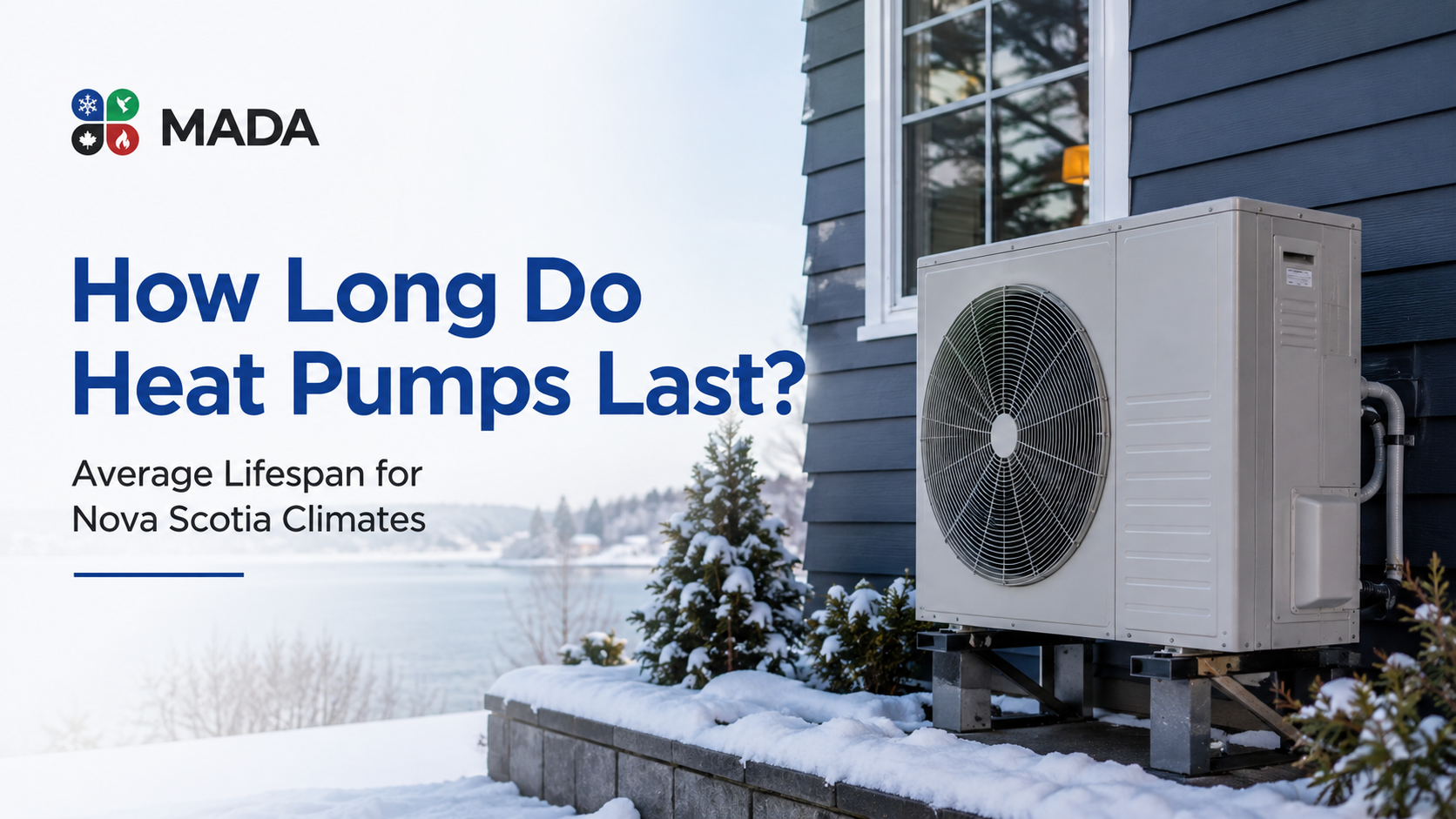

If your heat pump is running louder, cycling more, or you’re just doing the math on when to budget for a replacement, the honest answer depends on more than the number printed on the spec sheet. Climate, install quality, and maintenance history all move the number sometimes by five years or more.
If your current system is showing consistent signs of failure, finding a reliable heat pump replacement company in Nova Scotia can help you transition smoothly to a modern, high-efficiency unit.
What’s the Average Lifespan, Really?
Manufacturers typically rate heat pumps for 10–15 years, with premium systems and diligent maintenance sometimes stretching that to 20. But “rated” and “realistic” aren’t the same thing once climate enters the picture.
| Scenario | Typical Lifespan |
|---|---|
| National average (all climates, mixed maintenance) | 10–15 years |
| Premium system, well-maintained, moderate climate | Up to 20 years |
| Typical Nova Scotia home (coastal/humid, standard maintenance) | 12–15 years |
| Neglected system or poor original installation | 8–10 years |
The gap between the low end and the high end rarely comes down to brand alone; it comes down to installation quality, sizing, and how consistently the system is maintained.
It also helps to know which parts typically fail first. The compressor is the most expensive component and the one most tied to overall system lifespan when it fails on an older unit, replacement usually makes more sense than repair. The outdoor fan motor and circuit boards tend to be the more common mid-life repairs, often showing up around year 7–10, well before the compressor itself is at risk.
Why Nova Scotia Homes Age Heat Pumps Faster
Three regional factors shorten lifespan compared to the manufacturer’s lab-tested number:
- Coastal salt air corrodes the outdoor unit’s coils and fins over time, especially within a few kilometres of the coast, a real factor for much of the Halifax-to-South Shore corridor. Units without corrosion-resistant coil coatings age visibly faster in these areas.
- A long heating season means Nova Scotia heat pumps simply run more total hours per year than the same unit installed somewhere milder, and more runtime means more wear on the compressor, the single most expensive component to replace.
- Humidity and freeze-thaw cycles stress outdoor components and electrical connections in ways drier climates don’t, which is part of why annual maintenance matters more here than in many other parts of Canada.
5 Signs Your Heat Pump Is Nearing Replacement
- It’s 10+ years old and needs its first major repair. Age plus a costly repair is usually the tipping point, not either factor alone.
- It’s running constantly without reaching or holding your set temperature, especially outside of extreme cold snaps.
- Your power bills are climbing without a clear cause; declining efficiency is often the quiet culprit.
- You’re calling for repairs more than once a year. Frequent service calls usually mean the system is compensating for wear it can no longer keep up with.
- It’s noticeably louder or the outdoor unit shows visible corrosion, cracked housing, or refrigerant leaks.
One or two warning signs don’t always mean your heat pump needs to be replaced. However, if several are happening at the same time, particularly with a system over 10 years old, it may be time to consider your options. When repairs become frequent or expensive, heat pump replacement in Nova Scotia can help you determine whether replacing the system is a better choice than continuing to repair it.
How to Get the Most Years Out of Your System
Maintenance is the single biggest lever homeowners actually control. An annual tune-up filter cleaning or replacement, clearing debris from the outdoor unit, checking refrigerant charge, and inspecting electrical connections routinely adds years to a system’s working life. Coastal homeowners should also ask their installer about corrosion-resistant coil coatings up front; it’s a small spec difference that meaningfully slows salt-air wear.
Repair or Replace? A Quick Rule of Thumb
A common industry guideline: if a repair costs more than 50% of a full replacement, and the unit is past 10 years old, replacement is usually the better investment. A major repair on an aging system often just delays the same decision by a year or two, at close to the same cost. A $1,500 compressor repair on a 12-year-old unit, for example, rarely makes financial sense once you factor in the remaining years of declining efficiency you’d still be paying for afterward.
FAQs
Q: How long do heat pumps last in Nova Scotia specifically?
A: Most Nova Scotia homes see 12–15 years of realistic service life, shorter than the manufacturer’s best-case rating due to coastal humidity, salt air, and a long heating season, with strong maintenance and corrosion protection.
Q: Is 12 years old for a heat pump considered old?
A: It’s within the normal range where replacement starts to make sense, particularly if paired with a major repair, rising bills, or reduced performance in cold weather.
Q: Does regular maintenance really extend lifespan?
A: Yes, it’s consistently cited as the biggest controllable factor, often adding several years compared to a system that’s never serviced.
Q: Does a new heat pump come with a warranty that covers this?
A: Most new installations include a manufacturer’s parts warranty, commonly around 10 years on qualifying systems, plus a separate workmanship guarantee from the installer covering defects tied to the install itself, worth confirming both before you sign.
The Bottom Line
A heat pump’s lifespan in Nova Scotia depends more on proper installation, regular maintenance, and protection from coastal conditions than the brand you choose. If your heat pump is around 10 to 12 years old or needs frequent repairs, it may be time to consider a replacement: Mada Construction can help you understand your options and what to expect from a free assessment.