
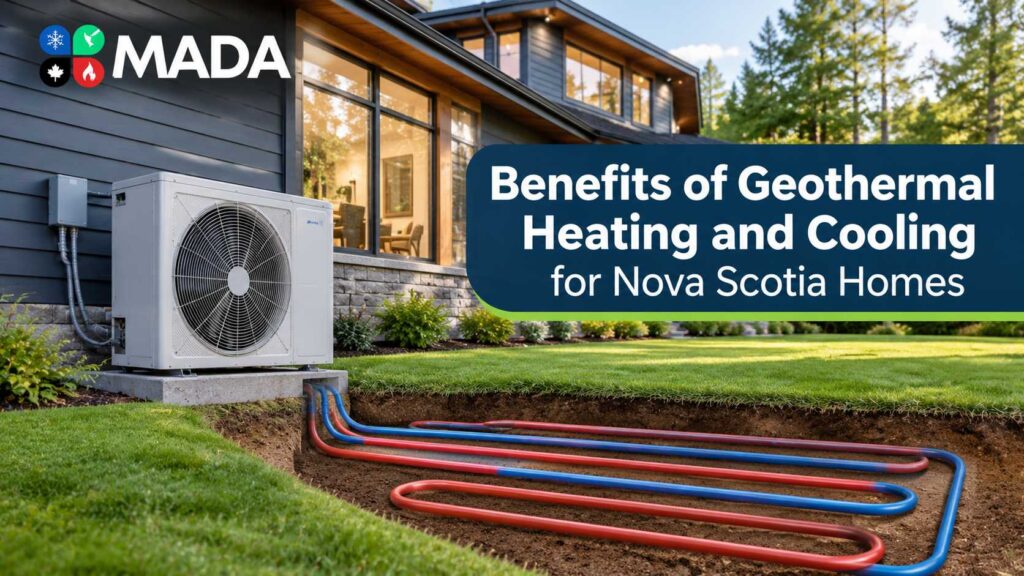
Most articles about geothermal focus on cost or the mechanics of how a ground loop works. Fewer actually lay out what living with the system is like day to day, which is often the part that matters most once the decision is made. Here is what geothermal genuinely delivers for a Nova Scotia home, beyond the technical explanation and the investment math.
Real Year-Round Comfort From a Single System
Geothermal heats and cools from the same equipment, drawing on a ground temperature that stays a stable eight to ten degrees Celsius year-round, regardless of whether it is the middle of a Nova Scotia winter or a humid August afternoon. That stability is the entire advantage. An air source system has to work against outdoor air that swings from well below freezing to warm and humid across a single year, while geothermal draws from a source that barely changes at all. The result is heating that does not taper off during the coldest stretch of winter and cooling that does not strain during the warmest days of summer.
Consistent Output Regardless of Outdoor Temperature
This point deserves its own mention because it changes how a home actually feels. Many heating systems, including standard air source heat pumps, lose capacity as outdoor temperature drops, which is exactly when a home needs full heating output the most. A geothermal system does not have that problem to the same extent, since the ground temperature it draws from remains relatively stable regardless of what is happening above the surface. For homeowners who have lived through a system that struggles on the coldest night of the year, that consistency is one of the most noticeable differences geothermal provides. Our geothermal heat pump installation services help Nova Scotia homeowners explore solutions designed to deliver reliable heating and cooling throughout the seasons.
Quiet Operation Without a Loud Outdoor Unit
A geothermal system has no large outdoor condenser running in the yard the way an air source heat pump does. The compressor and most of the mechanical equipment sit indoors, connected to the buried loop rather than an exposed outdoor unit. For homeowners with close neighbors, a smaller lot, or simply a preference for a quiet backyard, this is a genuine quality-of-life benefit that rarely gets mentioned alongside the efficiency numbers.
Lower Long-Term Operating Costs
Because geothermal draws on a stable underground source instead of working against outdoor air temperature swings, it typically uses less electricity to deliver the same heating and cooling output compared to an air source system and meaningfully less than oil heat or electric resistance baseboard over a full year. The exact savings depend on the specific home, so a generic percentage would not be an honest claim here, but the underlying mechanism—stable source temperature requiring less work from the compressor—is what drives that advantage consistently.
A Loop Built to Outlast the Equipment Above It
The buried ground loop, whether a vertical borehole or a horizontal field, is typically rated for twenty to twenty-five years or more, while the heat pump component connected to it usually runs fifteen to twenty years before needing replacement. That means a homeowner is paying once for underground infrastructure that will likely outlast more than one generation of the equipment above ground, something no air source system offers since all of its components sit outside and face weather exposure directly.
A Genuine Local Advantage
Independent analysis has ranked Halifax as the most financially favorable geothermal market among major Canadian cities, ahead of Montreal, Toronto, and Vancouver, thanks to a combination of local electricity rates, climate profile, and ground conditions. That is not true everywhere geothermal gets installed, which makes it a real local advantage specific to this market rather than a generic marketing claim. We help homeowners understand how geothermal may perform on their specific property through our geothermal heat pump solutions for Nova Scotia homes, taking individual site conditions and heating needs into account before recommending a system.
Fewer Moving Parts Exposed to Nova Scotia Weather
Salt air, snow load, and freeze-thaw cycles all take a toll on outdoor mechanical equipment over time. A geothermal system keeps its compressor and most electrical components indoors, away from that exposure, which tends to mean less weather-related wear over the life of the system compared to equipment that sits outside through every Nova Scotia winter.
FAQs
1. What is the biggest everyday benefit of geothermal over a standard heat pump?
Consistent heating and cooling output regardless of outdoor temperature, since geothermal draws from a stable ground source rather than outdoor air that swings with the seasons.
2. Is geothermal really quieter than other heat pump systems?
Yes. Most of the mechanical equipment sits indoors connected to the buried loop, so there is no large outdoor condenser running in the yard the way there is with an air source system.
3. Does geothermal really cool a home as well as it heats it?
Yes. The same stable ground temperature that supports efficient heating in winter supports efficient cooling in summer, from the same single system.
4. How long does the underground loop actually last?
A properly installed loop is typically rated for twenty to twenty-five years or more, often outlasting more than one generation of the heat pump equipment connected to it.
5. Is Nova Scotia actually a good location for geothermal?
Yes. Independent analysis has ranked Halifax as the most financially favorable geothermal market among major Canadian cities, which is a genuine regional advantage rather than a general claim.
The Full Picture Beyond the Numbers
Cost comparisons and payback periods matter, but the real value of geothermal heating and cooling extends beyond the initial investment. Quiet operation, consistent indoor comfort throughout Nova Scotia’s changing seasons, and durable underground infrastructure can make geothermal an appealing long-term option for homeowners. Mada Construction helps homeowners evaluate these practical benefits alongside installation requirements, property conditions, and long-term operating costs, providing informed guidance to help determine whether a geothermal heat pump is the right investment for their home.