
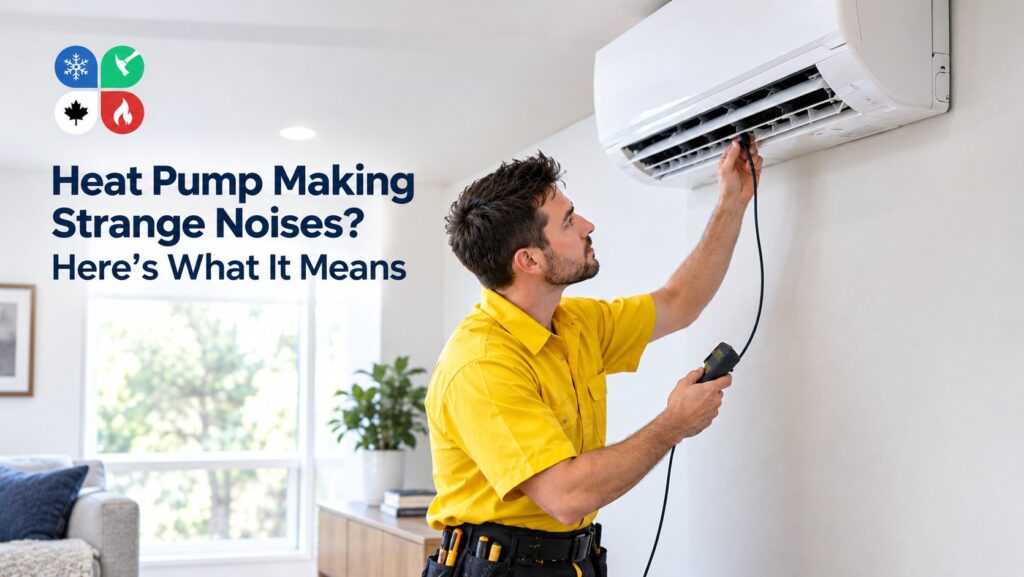
A heat pump usually tells you something is wrong before it actually fails. You just have to know how to listen. Most homeowners cannot tell a harmless rattle from a real warning sign, which means calls to a technician often come too late or too early. Here is how to tell which is which.
Why Noise Is Often the Earliest Warning Sign
Heat pumps have moving parts such as a compressor, a fan motor, refrigerant lines, and various electrical components. Wear in any of them tends to announce itself acoustically before it shows up as a performance problem or a full breakdown. A slightly loose panel rattles for weeks before it becomes an actual risk. A failing motor bearing squeals faintly before it seizes completely.
That is genuinely good news for homeowners, since it means most serious heat pump failures give you a window to act before the repair becomes a full breakdown or a much larger bill. The trick is knowing which noises are that early warning and which ones are simply the system doing its job. If you are already hearing unusual sounds from your system, heat pump repair in Nova Scotia can help you identify the underlying issue before it develops into a more serious problem.
Common Heat Pump Noises and What They Mean
| Noise | Likely Cause | Urgency |
| Clicking that repeats | Relay or control board issue | Moderate, worth a check soon |
| Loud new buzzing | Loose wiring or failing capacitor | Moderate to high |
| Rattling | Loose panel or debris in the outdoor unit | Usually low |
| Banging or clunking | Loose or broken internal part | High; stop the system if you can |
| Hissing | Refrigerant leak or duct leak | High, needs a professional soon |
| Screeching or squealing | Worn fan motor bearing | High, worsens quickly |
| Gurgling | Refrigerant flow issue | Moderate to high |
This table is a starting point rather than a full diagnosis, since the same noise can have more than one cause depending on where it is coming from. Still, it is a useful way to judge whether something can wait for a scheduled visit or needs attention right away.
A new, louder buzz often points to a loose electrical connection or a failing capacitor, both of which are worth addressing before the component fails. Rattling is usually mechanical and may be less urgent, such as a loose panel or debris caught in the outdoor fan. If the cause is simply a loose exterior panel, it may be something a homeowner can safely address, but persistent rattling should still be checked if it continues.
Banging or clunking deserves quick attention, since it can indicate that something has come loose internally. Continuing to run the system when a major internal component is moving or damaged can turn a relatively straightforward repair into a much more expensive problem.
Hissing can indicate a refrigerant leak or air escaping somewhere in the ductwork. A refrigerant issue requires professional attention, and either type of leak can reduce efficiency and make the system work harder. Screeching or squealing is commonly associated with a worn motor bearing and may become progressively louder as the component deteriorates. If an unusual noise is getting worse rather than going away, arranging Nova Scotia heat pump repair sooner can help identify the problem before it develops into a larger repair.
Sounds That Are Actually Normal
Not every noise is a warning sign, and it helps to know the baseline so you are not troubleshooting sounds that were never a real problem. A soft click at startup and shutdown is simply the relay engaging. A steady, moderate hum during normal heating or cooling is just the compressor and fan doing their job. A brief whooshing sound roughly every hour in winter is the defrost cycle clearing frost from the outdoor coil, and it is completely normal. The real difference between normal and abnormal comes down to whether the sound is new, whether it is getting louder or more frequent, and whether it comes with a change in performance such as weaker airflow or reduced heating.
When to Turn Off the System and Call Right Away
A few situations call for shutting the system off and calling immediately rather than simply monitoring it. A loud bang followed by the system stopping, or the breaker tripping, usually means a serious internal failure, and running the unit again before it is inspected risks further damage. Any noise paired with a burning smell is an electrical safety issue, not just a comfort one, and the system should stay off until it is checked. Grinding, especially from the outdoor unit, typically means metal parts are making contact after a bearing failure, and continuing to run it can turn a repair into a full unit replacement. A hissing sound alongside noticeably weaker heating or cooling points to a refrigerant leak that is already affecting performance, and it only becomes more expensive to fix the longer it runs.
What a Repair Typically Costs
Pricing depends on the actual cause, but as a general reference point for Nova Scotia homeowners, most standard repairs, including several of the noise-related issues above such as a loose part or a failing capacitor, run between $200 and $700. More involved fixes such as motor or control board replacement usually land between $450 and $900. A proper diagnosis upfront is what prevents surprise costs once a technician is already on site, which is why booking a same-day diagnostic visit is usually worth doing before a small noise turns into a bigger repair.
FAQs
1. Is it normal for a heat pump to make some noise?
Yes. A soft click at startup, a steady hum during operation, and a brief whooshing sound during the winter defrost cycle are all normal. New, loud, or changing noises are what actually deserve attention.
2. Is a hissing sound from my heat pump dangerous?
It is not an immediate safety hazard, but it usually means a refrigerant leak, which is a professional-only repair and should not be ignored.
3. Should I turn off my heat pump if it is making a loud banging noise?
Yes. Banging usually means something has come loose internally, and running the system risks turning a simple repair into a full replacement.
4. How much does it cost to fix a noisy heat pump?
Most standard repairs run between $200 and $700, with more involved fixes such as motor or control board replacement typically landing between $450 and $900.
Do Not Wait for a Sound to Get Worse
Most heat pump noises are either completely normal or an early warning that is still relatively inexpensive to address. The more costly outcomes often come from waiting rather than recognizing the difference. If something sounds different than it used to, that instinct is usually worth paying attention to. Mada Construction helps homeowners across Nova Scotia identify heat pump issues early, with experienced technicians, straightforward diagnostics, and clear recommendations before a small problem has a chance to become a major repair.