
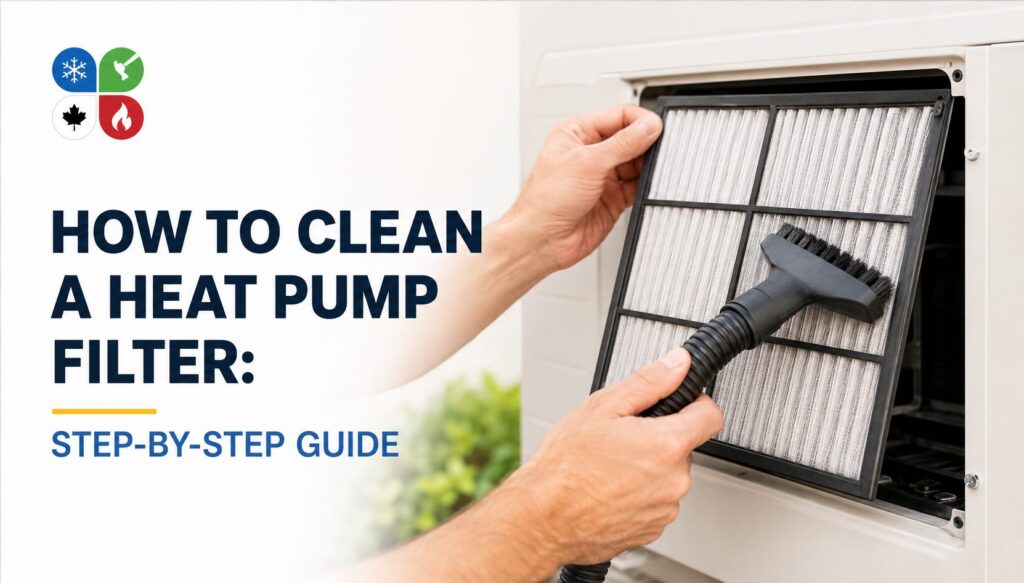
A clogged filter is the single most common and most avoidable cause of a heat pump running harder than it should. It’s also the only piece of maintenance you don’t need a technician for. Below is exactly how to do it safely, how often it actually needs doing, and how to tell when the problem has moved past what a filter rinse can fix.
Why This Matters More in a Nova Scotia Home
Filters clog faster here than the manufacturer’s general guidance usually accounts for. Coastal humidity keeps dust and pollen slightly damp, which makes it stick to the mesh instead of blowing through. Heavy spring and late-summer pollen seasons load filters in weeks rather than months. And homes running a heat pump as the primary heat source through a long Nova Scotia winter simply push more air and more airborne debris through that filter than a home using it only for occasional cooling.
None of that makes the job harder, just more frequent. Treating it as a quick recurring habit rather than an occasional chore is really the whole trick. That’s the same logic behind our professional heat pump cleaning Nova Scotia services’ regular attention on a schedule built around how this climate actually treats a system, rather than a generic annual reminder.
What You’ll Need
Nothing here requires special equipment; most of it is already in a kitchen or garage.
- A step stool (for wall-mounted units)
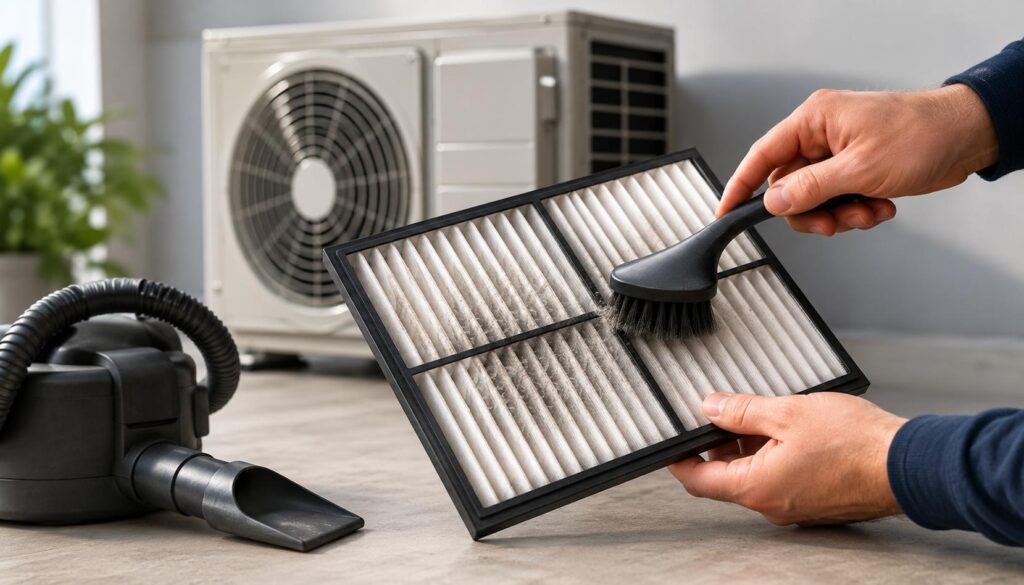
- A vacuum with a soft brush attachment
- A sink or hose
- A few drops of mild dish soap
- A soft microfiber cloth
Step-by-Step: Cleaning Your Filter
- Power down the unit. Turn it off at the remote and switch off the power at the breaker. This protects you and stops the fan from blowing loose dust back into the room while you work.
- Open the front panel. Grip the bottom edge and lift until it clicks open. Some models release from side tabs; check yours before forcing it.
- Remove the filters. Take a quick photo of how they’re seated first, then slide the mesh screens straight out.
- Vacuum off loose debris. A gentle pass with a brush attachment is often enough on its own for lightly soiled filters.
- Rinse with lukewarm water. Use water no hotter than 40°C (104°F) with a few drops of mild soap, rinsing from the back side through to the front. Skip harsh chemicals and stiff brushes; both can damage the mesh.
- Air-dry completely. Set filters in a shaded spot away from direct sun or heat sources. This is the step most people rush, and it’s the one that matters most. A damp filter reinstalled too soon is a common cause of musty odours and mold growth.
- Wipe down the unit. While filters dry, run a damp microfiber cloth over the panel and louvers.
- Reinstall and test. Slide the fully dry filters back in the same orientation, close the panel until it clicks, restore power, and run the unit briefly to confirm normal operation.
How Often Should You Clean It?
| Household Type | Recommended Frequency |
| Standard household | Every 4–6 weeks |
| Pets, allergies, or coastal property | More frequently, closer to every 4 weeks |
| Smokers or heavy primary-heat use | Every 3–4 weeks |
Filter cleaning is maintenance you do between professional visits, not instead of them most Nova Scotia homes still need a deeper expert heat pump cleaning roughly every 12 to 18 months. You can see what that deeper visit involves on our service page.
Mistakes That Undo a Good Filter Cleaning
A few habits quietly cancel out the work above:
- Reinstalling before fully dry. This is the single biggest cause of the musty smell homeowners blame on “dirty filters” after they’ve already cleaned them.
- Using hot water or harsh cleaners. Heat above 40°C and bleach-based products can warp the mesh or break down its coating, making it trap dust less effectively over time.
- Scrubbing instead of rinsing. Stiff brushes tear the fine mesh. A gentle rinse and light vacuum is enough for nearly all buildup.
- Forgetting the breaker. Skipping the power-off step risks the fan kicking on mid-clean, which is both a safety issue and a good way to send loose dust straight back into the room.
When Filter Cleaning Isn’t Enough
If you’ve cleaned the filter and the unit still smells musty, sounds off, or seems to be losing efficiency, the problem usually isn’t the filter; it’s the blower wheel or coil behind it, which only professional equipment can properly access. A neglected system can lose 10–30% of its efficiency this way, quietly, without ever throwing an error. Rattling, ice on the outdoor unit outside of normal defrost cycles, or a sudden jump in your power bill are all signs pointing past what a rinse can solve. That’s a job for a technician, not a second attempt at the same clean.
FAQs
1. How often should I clean my heat pump filter?
Every 4–6 weeks for most households, more often with pets, allergies, or a coastal property where salt and humidity build up faster.
2. Can I use regular soap to clean the filter?
Yes, a few drops of mild dish soap in lukewarm water are enough. Avoid hot water, bleach, and harsh chemicals, which can warp or degrade the mesh.
3. Why does my heat pump smell musty after I clean the filter?
Usually because the filter was reinstalled before it was fully dry or because the odor is actually coming from the blower wheel or coil, which filter cleaning doesn’t reach.
4. Is filter cleaning enough, or do I still need professional service?
Both matter. Filter cleaning handles surface dust between visits; professional cleaning reaches the blower wheel and coil, which filters alone can’t touch.
5. Can a dirty filter damage my heat pump?
Over time, yes. A badly clogged filter restricts airflow, which forces the system to work harder and can lead to icing, reduced efficiency, and added strain on the compressor, the most expensive component to repair or replace.
Keep the Habit Simple
Filter cleaning is the one piece of heat pump upkeep every homeowner can and should handle themselves. Set a reminder every 4 to 6 weeks, and if you notice odors, noise, or a performance drop that a clean filter doesn’t fix, that’s your sign to book a deeper clean. Mada Construction covers what’s included in a professional visit and current pricing.