

Most “annual maintenance” advice online is written for climates with a short heating season and a long, easy shoulder season. Nova Scotia doesn’t get that luxury coastal salt air; heavy pollen and a heating season that can run from October through April mean a single spring tune-up isn’t enough on its own. Here’s what actually needs doing, season by season, and what’s safe to do yourself versus what should go to a licensed technician.
Why “Once a Year” Isn’t Really Enough Here
A single annual visit is the baseline every manufacturer recommends, and it matters, but it isn’t the whole picture in this climate. Salt air and humidity accelerate corrosion on outdoor units year-round, not just in winter. Heavy pollen seasons clog filters and coils faster than a spring-only schedule accounts for. And because the heating season runs long, a system that goes into November with a dirty filter or low refrigerant is going to run inefficiently for months, not weeks, before anyone notices the bill.
Treating maintenance as four small check-ins rather than one big appointment catches problems while they’re still cheap to fix.
That’s the approach behind our heat pump maintenance in Nova Scotia: seasonal check-ins built around Nova Scotia’s climate instead of one generic annual visit.
Spring: Post-Winter Recovery and Pre-Cooling Prep
Spring is about undoing winter’s wear and getting ready for cooling season.
- DIY: Clear the outdoor unit of any leftover ice, snow-load debris, or salt residue from winter storms. Replace or clean the filter if it hasn’t been done since fall. Rinse the outdoor coil gently with a garden hose (low pressure, never a pressure washer).
- Professional: Refrigerant level check, electrical connection inspection, and a full coil cleaning are especially important for coastal properties where salt buildup accelerates corrosion over winter.
Summer: Cooling Load and Humidity Control
Summer is lighter on system stress than winter, but pollen and humidity still take a toll.
- DIY: Check filters monthly during heavy pollen weeks; this is the season filters clog fastest. Keep the outdoor unit’s 2-foot clearance free of grass clippings, mulch, and overgrown plants. Confirm the unit is dehumidifying properly, not just cooling.
- Professional: Mid-summer check if the system is running constantly without maintaining temperature; often a refrigerant or airflow issue worth catching before fall.
Fall: The Most Important Checkpoint of the Year
If a Nova Scotia homeowner only does one seasonal check beyond the annual visit, this is the one. Everything from here forward runs through winter.
- DIY: Fresh filter before the heating season starts. Clear fallen leaves and debris from around the outdoor unit. Test emergency/backup heat mode before you actually need it on a cold night.
- Professional: Full pre-winter inspection: refrigerant charge, electrical connections, thermostat calibration, and a check of cold-climate performance settings. This is the visit that determines whether the system handles the first real cold snap without a surprise service call.
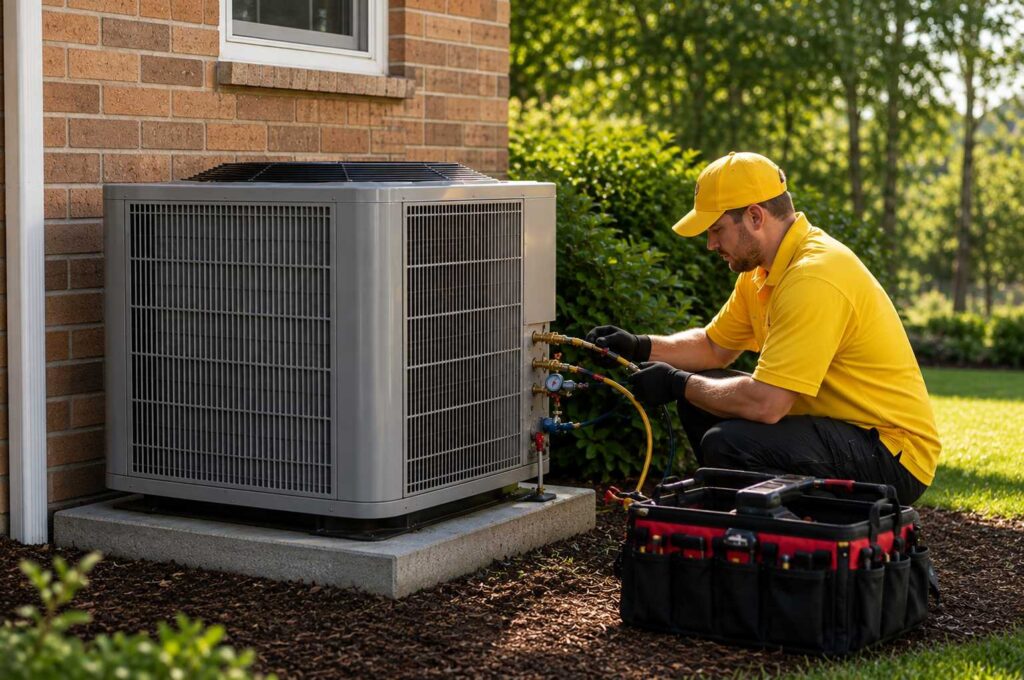
Winter: Monitoring During Peak Demand
Winter isn’t a heavy maintenance season, but it’s the one where small issues become urgent fastest.
- DIY: Keep the outdoor unit clear of snow buildup and ice after every storm. A buried or ice-blocked unit loses efficiency fast and can trip into fault mode. Watch for ice forming on the unit that doesn’t clear during normal defrost cycles.
- Professional: Emergency service if the system can’t keep up during a cold snap, is short-cycling, or backup heat is running constantly; waiting until spring on a winter symptom usually costs more in comfort and power bills than the service call would. If something feels off, it’s worth booking professional heat pump service before a small issue turns into a bigger repair.
Season-by-Season Quick Reference
| Season | Homeowner (DIY) | Professional |
| Spring | Clear debris, rinse coil, check filter | Refrigerant check, coil cleaning, electrical inspection |
| Summer | Monthly filter checks, clear unit perimeter | Diagnose constant-run or humidity issues |
| Fall | Fresh filter, clear leaves, test backup heat | Full pre-winter inspection & calibration |
| Winter | Clear snow/ice from outdoor unit | Emergency service for performance issues |
What Homeowners Should Never DIY
Refrigerant handling, electrical component testing, compressor diagnostics, and chemical coil cleaning all require a licensed technician both for safety and because DIY attempts on these often void manufacturer warranties. If a task involves opening electrical panels or touching refrigerant lines, it belongs on the professional side of the list.
FAQs
1. How often should a heat pump be serviced in Nova Scotia?
At minimum, once a year professionally, ideally paired with a fall pre-winter check given how long and demanding the heating season is here, plus simple DIY filter and debris checks each season in between.
2. Can I do heat pump maintenance myself?
Yes, for filter changes, clearing debris, and basic coil rinsing. Refrigerant, electrical, and deep coil cleaning tasks need a licensed technician.
3. What happens if I skip fall maintenance?
The system heads into the coldest months with whatever wear built up over the year — reduced efficiency, higher bills, and a higher chance of a mid-winter breakdown when demand (and repair wait times) are at their peak.
4. Does regular maintenance affect my warranty?
Often yes. Most manufacturer warranties require documented annual professional maintenance to stay valid, so skipping it can be a costlier mistake than the maintenance fee itself.
Keep It Simple: Put It on the Calendar
The homeowners who get the most years and the lowest bills out of their heat pump aren’t doing anything complicated; they’re just not letting a full year pass between checks. Set a filter reminder, do a five-minute debris check each season, and book the professional visits before the coldest and hottest months hit rather than after something goes wrong. If you’d rather not keep track of it yourself, Mada Construction can handle the seasonal maintenance and keep you on a regular schedule.