
Winter in Nova Scotia brings biting coastal winds and deep freezes that test the limits of traditional heating systems. When outdoor air temperatures plunge, conventional air source units must consume vast amounts of electricity to pull thermal energy from a freezing environment. For homeowners looking to escape skyrocketing utility bills and inconsistent indoor comfort, understanding alternative heating methods is essential. Geothermal technology offers a completely different approach by bypassing the outside air entirely and tapping directly into the stable thermal mass stored beneath the earth’s surface.
Tapping Into Deep Earth Temperatures
Just a few feet below the frost line, the ground maintains a remarkably consistent temperature regardless of how hot or freezing it is above ground. While air temperatures fluctuate wildly across the seasons in Atlantic Canada, subsurface earth acts as a massive thermal battery, staying cool in the summer and relatively warm through the winter months. To leverage this natural phenomenon, property owners often look into advanced geothermal heating systems in Nova Scotia that transform underground stability into reliable household climate control.
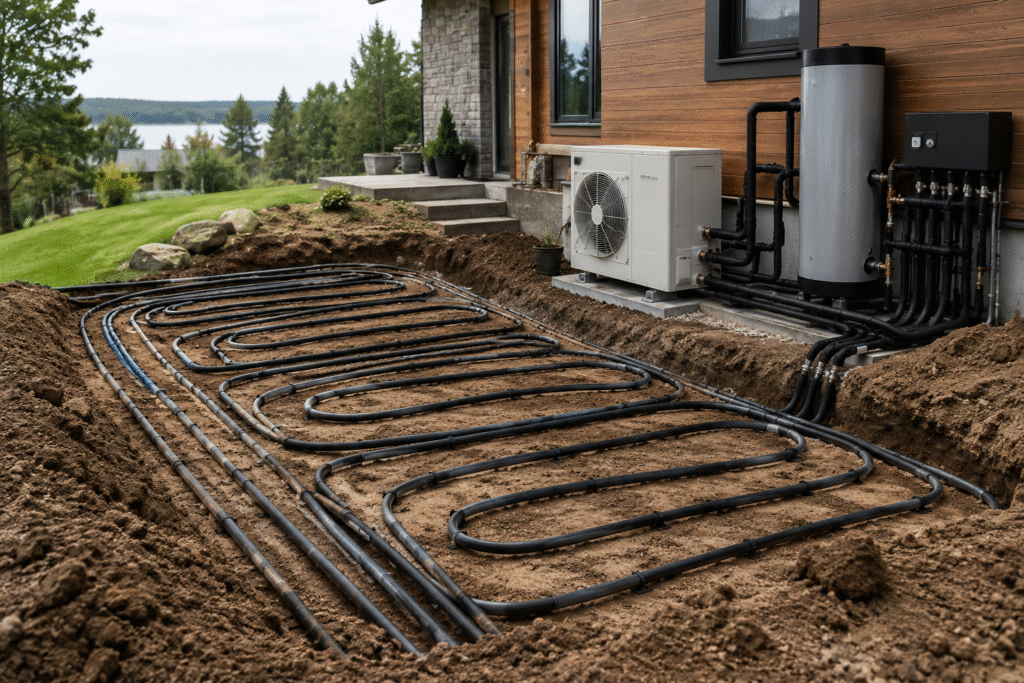
The system itself relies on a closed or open loop configuration of high-density polyethylene pipes buried vertically in boreholes or horizontally in shallow trenches. A water and antifreeze solution circulates continuously through these subterranean loops, absorbing ambient heat from the surrounding soil or rock during winter months. Because the earth provides a baseline warmth far superior to winter air, the mechanical heat pump unit inside the home has to exert far less effort to raise indoor temperatures to comfortable levels.
The Mechanics Inside Your Home
Once the circulating fluid absorbs heat underground, it travels back inside to a specialized heat pump cabinet. Inside this unit, a refrigeration cycle kicks into gear. A compressor and heat exchanger extract the thermal energy from the fluid and concentrate it to a higher temperature level. This concentrated heat is then transferred directly into your home’s forced air ductwork or hydronic in-floor heating network.
During the cooling season, the process simply reverses. The system absorbs unwanted heat from inside your living spaces and circulates it down into the cooler earth, effectively using the ground as an underground heat sink. This dual functionality means a single installation handles both winter heating and summer air conditioning seamlessly.
Why Geothermal Excels in Nova Scotia
Nova Scotia’s unique climate profile marked by high humidity, coastal moisture, and extended heating seasons demands robust HVAC solutions. Traditional air source equipment experiences capacity drops and frequent defrost cycles when ambient temperatures slide well below freezing. Geothermal units remain entirely unaffected by surface weather conditions because the ground temperature stays stable year round.
Furthermore, these systems boast exceptional efficiency ratings. While electric resistance heaters convert one unit of electricity into one unit of heat, and standard air source units perform well above that, top tier geothermal systems can deliver up to four units of energy for every single unit of electricity consumed. This high coefficient of performance translates into massive long term savings on monthly utility bills, helping homeowners insulate themselves against fluctuating fossil fuel and electricity rates.
The Four Loop Types (and Which Fits Your Property)
Not every property can support every loop configuration available land, soil conditions, and water access all factor in. Here’s how the four options compare:
| Loop Type | How It Works | Best For | Typical Footprint |
| Vertical Closed Loop | Boreholes drilled 45–150 metres deep, pipe run down and back up | Smaller lots, urban and suburban properties | Minimal surface disruption |
| Horizontal Closed Loop | Pipe laid in trenches a few metres down | Larger rural properties with room to excavate | Roughly ¼–½ acre of open land |
| Pond/Lake Loop | Pipe coils submerged in an adjacent body of water | Waterfront properties with a suitable pond or lake | Lowest installation cost of the closed-loop options |
| Open Loop/Standing Column | Draws and returns water directly from an existing well | Properties with a well that can support the flow | No ground loop excavation needed |
Geothermal vs. Air-Source Heat Pumps: How They Actually Compare
This is the question that matters most, and honestly, the answer isn’t “geothermal wins.” Both technologies have a clear use case, and pretending otherwise does homeowners a disservice.
| Factor | Geothermal | Air-Source Heat Pump |
| Installed cost | $25,000–$45,000 | Typically a fraction of that |
| Efficiency in extreme cold | Unaffected ground temp stays stable | Cold-climate models hold up well, but capacity still tapers in deep cold |
| Visible equipment | Indoor unit only; nothing outside | Outdoor condenser required |
| Land/site requirements | Loop field, borehole, or water access needed | Minimal small outdoor pad |
| Typical lifespan | 20–25+ years for the loop, 15–20 for the heat pump component | 12–15 years |
| Best fit | Long-term owners with suitable land and high heating demand | Most homes, especially where upfront budget or lot size is limited |
Evaluating Installation and Upfront Considerations
While the operational savings and environmental benefits are compelling, investing in a ground source setup requires careful planning. Property layout, soil composition, and available land space dictate whether a horizontal trench system or a vertical borehole installation is most appropriate. Trenching requires ample yard space, whereas vertical boreholes fit neatly on smaller properties while requiring specialized drilling equipment.
Additionally, the initial capital expenditure for excavation, loop placement, and specialized indoor equipment is higher than that of standard heat pumps. However, federal and provincial grants, such as efficiency rebates available through Clean Energy programs in Nova Scotia, significantly offset these initial costs. When paired with professional residential geothermal installation solutions, the investment yields decades of reliable, low-maintenance performance.
Long-Term Reliability and Maintenance
Geothermal units feature fewer outdoor components exposed to snow, ice, and driving rain, which drastically reduces wear and tear. The underground loops are typically warranted for decades, and the indoor mechanical components are housed securely away from the elements. Routine maintenance is minimal, usually requiring little more than annual filter checks and system inspections by a qualified technician to ensure optimal fluid pressure and pump performance.
Making the Right Choice for Your Property
Transitioning to renewable underground energy is a major upgrade that enhances home value, lowers carbon footprints, and guarantees dependable multi-season comfort. If you are ready to explore site feasibility, loop design, or rebate eligibility for your property, consult with the experienced professionals at Mada Construction to schedule your complete geothermal assessment today.